
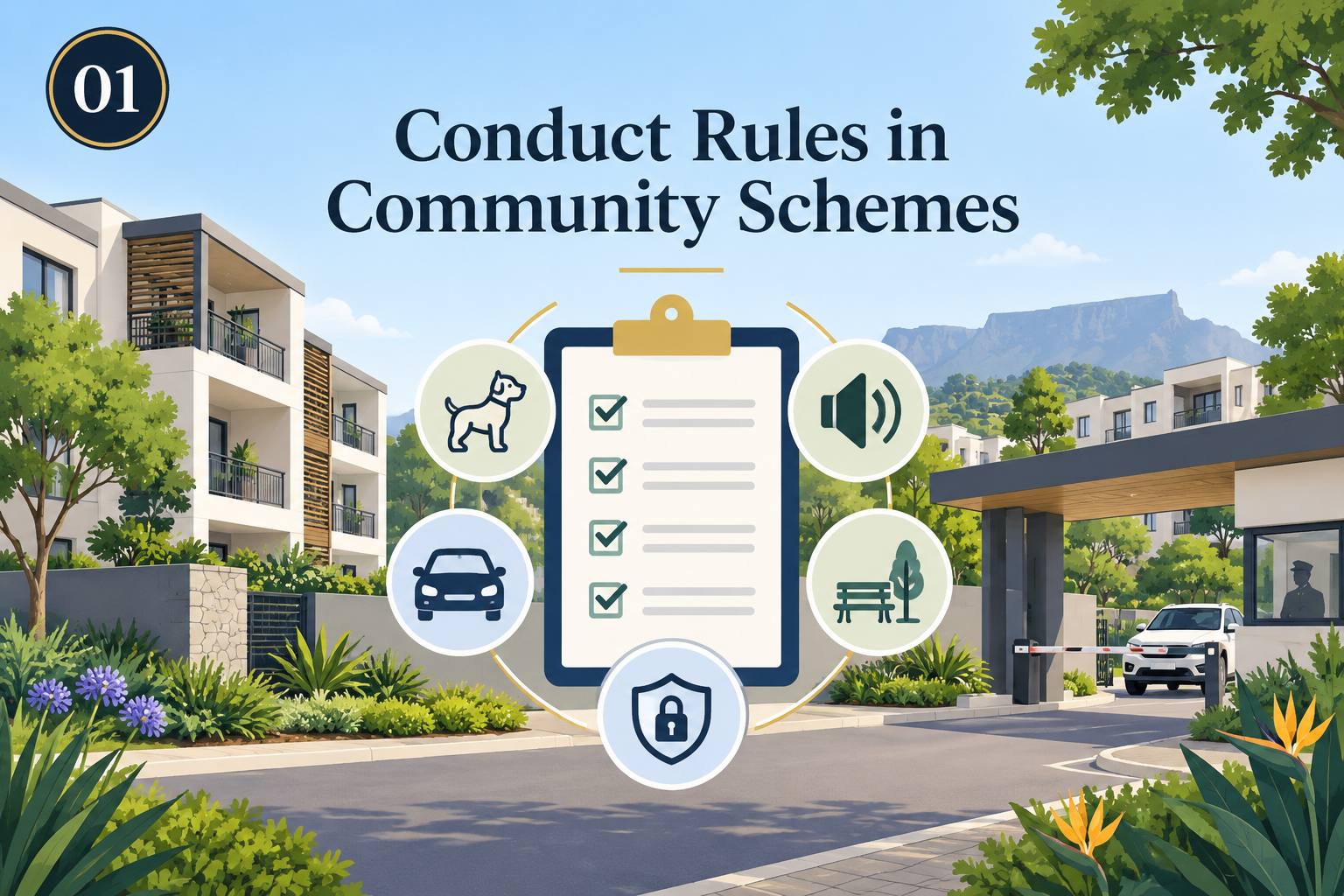
Conduct Rules in Community Schemes – What They Are, What They Control, and Why They Matter
Conduct rules are the “day-to-day living” rules of a community scheme. They regulate behaviour and how owners, tenants, visitors and staff may use sections, Exclusive Use Areas (EUAs), and common property.
What are conduct rules?
Conduct rules regulate behaviour and the use of property in a scheme, including:
- noise and nuisance conduct
- parking and traffic flow
- pets and pet applications
- use of balconies, gardens, and common facilities
- security and access behaviour
- tenant conduct and visitor controls
Conduct rules vs management rules: what’s the difference?
- Conduct Rules: Behaviour and use of sections/common property/EUAs
- Management Rules: Administration and operational management (governance processes, meeting procedures, levy admin, etc.)
Who drafts conduct rules?
- Sectional Title: Trustees draft them (often with professional assistance), but cannot implement them alone
- HOAs: Authority comes from the Constitution/MOI — some changes may be made by directors depending on the MOI, but rules are still best submitted to CSOS for certification.
Why do schemes struggle with conduct rules?
Common challenges include:
- outdated rules that conflict with the CSOS Practice Directive
- rules that are discriminatory or unconstitutional
- unclear enforcement procedures (no breach process, no warning steps)
- fines written as fixed Rand amounts (which become outdated)
- trying to enforce rules before they are certified
Are conduct rules enforceable without CSOS approval?
No. Scheme-specific conduct rules are enforceable only after CSOS issues a Section 10 Certificate.
If a scheme is waiting for approval, the only enforceable rules are the basic rules contained in the STSMA framework (not scheme-specific custom rules).