
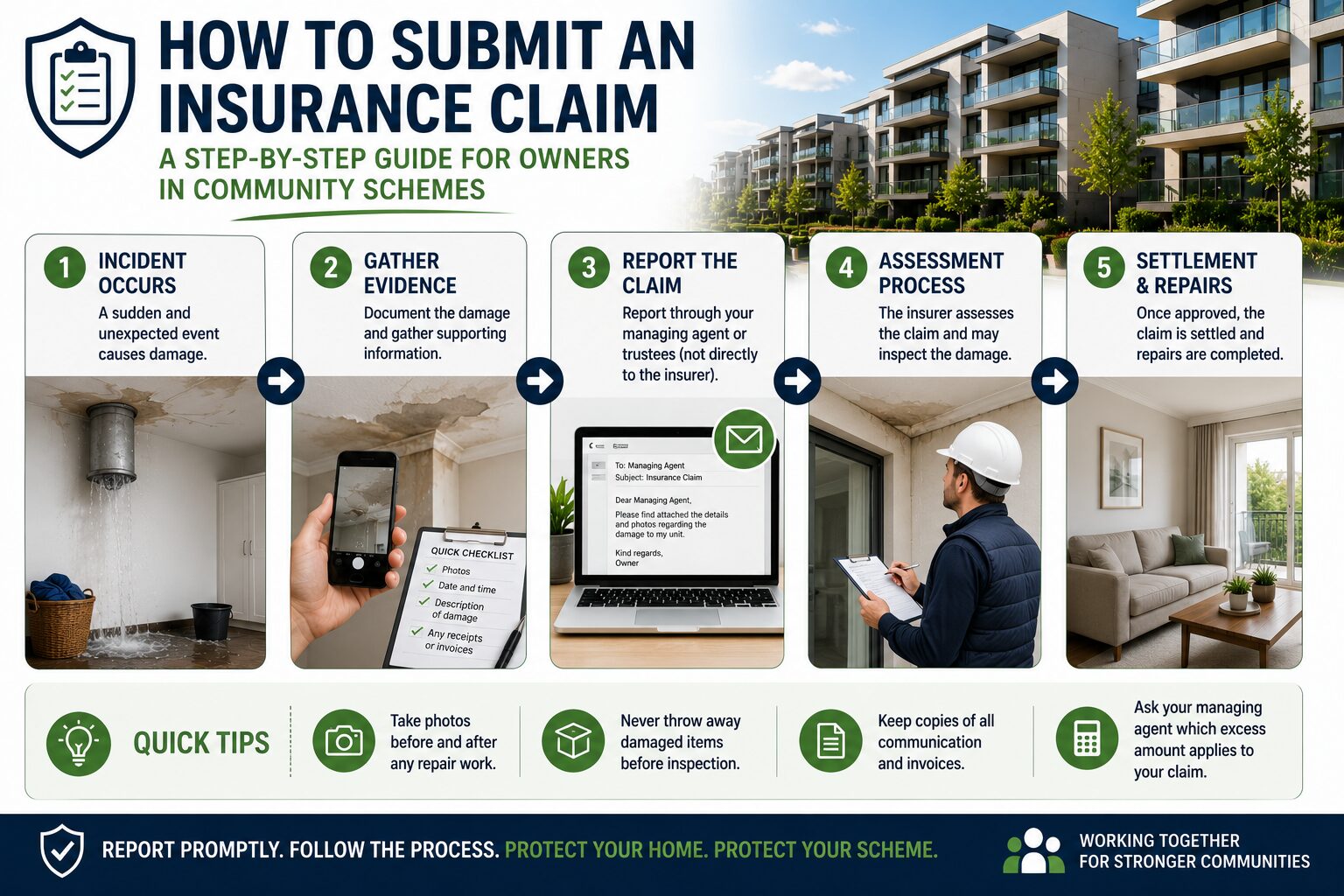
How to Submit an Insurance Claim – A step-by-step guide for owners in community schemes
💡 Why It’s Important
Submitting a claim correctly and on time helps ensure a smooth process and faster settlement. Because the insurance policy belongs to the scheme, not the individual owner, claims usually need to be reported through your managing agent or trustees, not directly to the insurer.
Knowing what information to provide and how to follow up prevents unnecessary back-and-forth and reduces the risk of a claim being declined.
🧭 Step-by-Step: How to Submit a Claim
1️⃣ Prevent Further Damage
Take all reasonable steps to limit further loss or damage.
If emergency repairs are required (like switching off water or covering an exposed roof), go ahead — but keep invoices and take photos.
Most insurers allow emergency work only to prevent additional damage, not full repairs before inspection.
2️⃣ Report the Incident Promptly
Notify your Portfolio Specialist or managing agent as soon as possible after the event — ideally within 7 days and no later than 30 days.
Late reporting can be deemed prejudicial and give the insurer the right to decline the claim.
Include:
- Your full name and unit number
- The date, time, and cause of the damage
- Description of what was affected
- Photos or short videos if possible
3️⃣ Police Report (If Applicable)
If the incident involves theft, malicious damage, or vandalism, report it to your nearest SAPS station within 48 hours and get a case number.
This is a standard insurer requirement.
4️⃣ Complete the Claim Form
Your managing agent or the insurer will provide a claim form to complete.
Ensure all details are clear and accurate — incorrect or missing information may delay processing.
Attach photos, proof of ownership (if applicable), and any invoices for temporary or emergency repairs.
5️⃣ Co-operate with the Assessor
For larger claims, an insurance assessor may be appointed to inspect the damage.
Be available to give details and allow access to the affected area.
Keep damaged items until the inspection is completed.
6️⃣ Do Not Admit Liability
If the damage affects another unit or third party, never admit fault or make promises of payment.
The insurer must first determine who is responsible and whether the claim qualifies under the scheme’s policy.
7️⃣ Track and Follow Up
Keep a record of your claim reference number, dates of communication, and the name of the contact person handling it.
Follow up politely through your managing agent if you don’t receive feedback within a reasonable timeframe.
🧩 What to Expect
Depending on the complexity, claims may take 2–6 weeks to finalise.
Smaller, straightforward claims (like geysers) are often resolved faster, while structural or liability claims may take longer.
💬 Quick Tips
- Take photos before and after any repair work.
- Never throw away damaged items before inspection.
- Keep copies of all communication and invoices.
- Ask your managing agent which excess amount applies to your claim.
⚠️ Common Reasons Claims Are Delayed or Declined
- Claim reported too late
- Missing details or no supporting photos
- Repairs done before inspection
- Maintenance-related damage (not sudden or unforeseen)
- Premiums or policy not up to date
🏡 Example
A burst geyser damages a ceiling and cupboards.
1️⃣ The owner turns off the water and power.
2️⃣ Photos are taken and the managing agent is notified immediately.
3️⃣ A claim form and plumber’s report are submitted within a few days.
4️⃣ The insurer appoints a contractor after assessment.
Result: claim approved, ceiling and cupboards repaired, less the applicable excess.
Submitting an insurance claim does not need to be complicated, but it does require prompt action, clear information, and proper supporting documents. By reporting damage as soon as possible, taking steps to prevent further loss, keeping records, and following the correct claim process, owners can help avoid unnecessary delays or disputes. When in doubt, contact your Broker or Portfolio Specialist for guidance so that the claim can be handled correctly under the scheme’s insurance policy.