
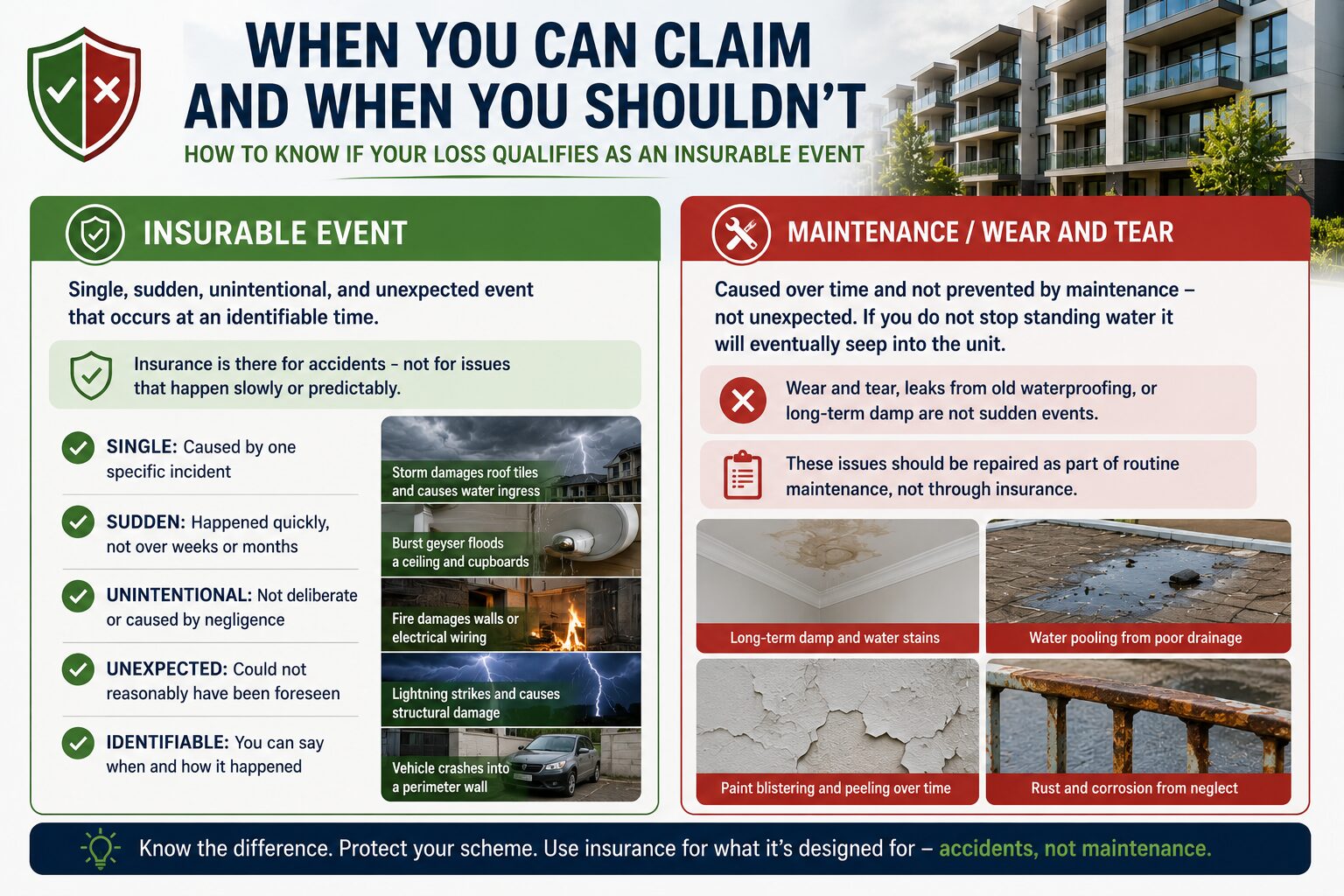
When You Can Claim and When You Shouldn’t – How to know if your loss qualifies as an insurable event
💡 Why This Matters
Not every loss or repair qualifies as an insurance claim. Community scheme insurance is designed to cover accidental, unforeseen events — not ongoing maintenance issues or gradual wear and tear.
Knowing what qualifies as an insurable event helps owners avoid frustration, keeps the scheme’s claims record healthy, and ensures cover is used appropriately when truly needed.
⚙️ What Qualifies as an Insurable Event
For a loss to qualify as an insurable event, the damage must result from a:
Single, sudden, unintentional, and unexpected event that occurs at an identifiable time.
Insurance is there for accidents – not for issues that happen slowly or predictably.
Examples of valid insurable events:
- A storm damages roof tiles and causes water ingress
- A burst geyser floods a ceiling and cupboards
- A fire damages walls or electrical wiring
- Lightning strikes and causes structural damage
- A vehicle accidentally crashes into a perimeter wall
🧩 Core Tests for “Damage”
When assessing a potential claim, use this simple checklist:
- ✅ Single: Caused by one specific incident
- ✅ Sudden: Happened quickly, not over weeks or months
- ✅ Unintentional: Not deliberate or caused by negligence
- ✅ Unexpected: Could not reasonably have been foreseen
- ✅ Identifiable: You can say when and how it happened
When reporting a claim, always note the time, cause, and evidence – photos are especially valuable for assessors.
⚖️ When Not to Claim
Sometimes, it’s better not to submit a claim – even if you technically could.
1️⃣ The loss is below the excess.
If repairs cost less than the excess (the amount you pay before insurance responds), it’s usually best to handle it privately.
2️⃣ The damage is from poor maintenance.
Wear and tear, leaks from old waterproofing, or long-term damp are not sudden events.
These issues should be repaired as part of routine maintenance, not through insurance.
3️⃣ The event breaches policy conditions.
If a rule or safety condition (like storing flammable materials incorrectly) is broken, the claim may be declined.
4️⃣ The claim frequency affects premiums.
Submitting multiple small claims can increase the scheme’s loss ratio, leading to higher future premiums or even policy restrictions.
💬 Practical Example
- Claim-worthy: A storm lifts roof tiles and floods the ceiling overnight.
- Not claim-worthy: Damp slowly spreads through a wall over months due to a leaking gutter.
Both cause water damage — but only one is sudden and unforeseen.
🧭 When in Doubt
If you’re unsure whether an incident qualifies, speak to your Portfolio Specialist or managing agent before submitting a claim.
They can help determine whether it’s covered by the policy or should be handled as maintenance.
💡 Quick Tip
Keep your own contents insurance policy up to date.
Even if the scheme’s policy covers the structure, your personal belongings, electronics, furniture, and décor, fall under your home contents policy.