
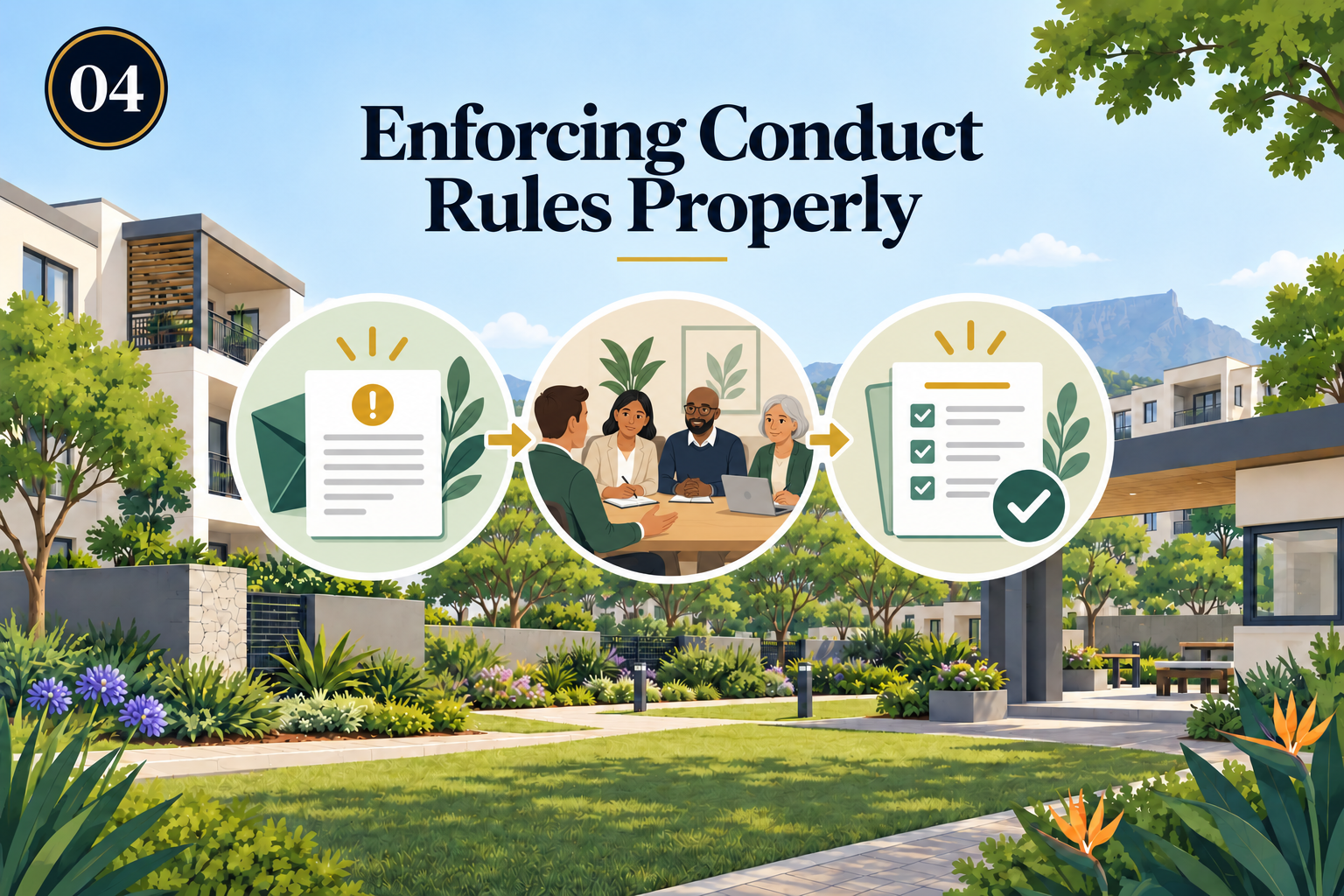
Enforcing Conduct Rules Properly – Warnings, Fines, Emergencies, and What CSOS Looks For
Even with certified rules, enforcement must be procedurally fair and consistent.
When can rules be enforced?
Only once the scheme has a Section 10 Certificate from CSOS.
What is a compliant breach procedure?
A typical process discussed in the webinar:
- First written warning (with timeframe to remedy — often 7 days is reasonable)
- Second written warning
- Owner given the opportunity to attend a trustee meeting and state their case
- Trustees decide by majority decision whether a fine will be imposed
- Decision must link back to the specific clause breached
Can trustees fine someone on the first offence?
Generally, no. The webinar guidance was:
- first transgression = warning
- second transgression = fine may be imposed (if procedure is followed)
How large can a fine be?
CSOS directive guidance discussed:
- fines must be proportionate
- fines must be less than one month’s administrative levy
Best practice is to avoid fixed Rand amounts in the rules and instead link fines to the admin levy threshold so the rule stays valid as levies change.
What about emergencies or dangerous conduct?
In situations involving a real risk of harm, injury, or damage, trustees may need to act more urgently. The webinar example was that warnings don’t always make sense where the behaviour has already happened and poses immediate risk (e.g., fireworks incidents). Even then, record-keeping and fairness remain critical.
What happens if an owner disputes a fine at CSOS?
CSOS will ask:
- what breach process was followed
- whether warnings were issued
- whether the owner was given an opportunity to be heard
- whether trustees enforced rules consistently across owners
If trustees can show a documented process and consistent enforcement, CSOS is less likely to overturn the fine.